Your Plants Are Full of Leaves. Here's Why They Won't Bloom.
Most flowering plants stop blooming for one simple reason — and it has nothing to do with your skills. This guide shows you exactly what to fix, one step at a time.
Instant download
Trusted by home gardeners across Kerala and beyond.
You're Caring Too Much. That's Why There Are No Flowers.
Here is something most gardeners never hear: your plants might be stuck in leaf mode because you are doing too much, not too little. More water. Bigger pot. Extra fertilizer. It all sounds right. But for many flowering plants, that kind of comfort is exactly what tells them to keep growing leaves instead of blooms. They have no reason to flower. Everything is too easy.
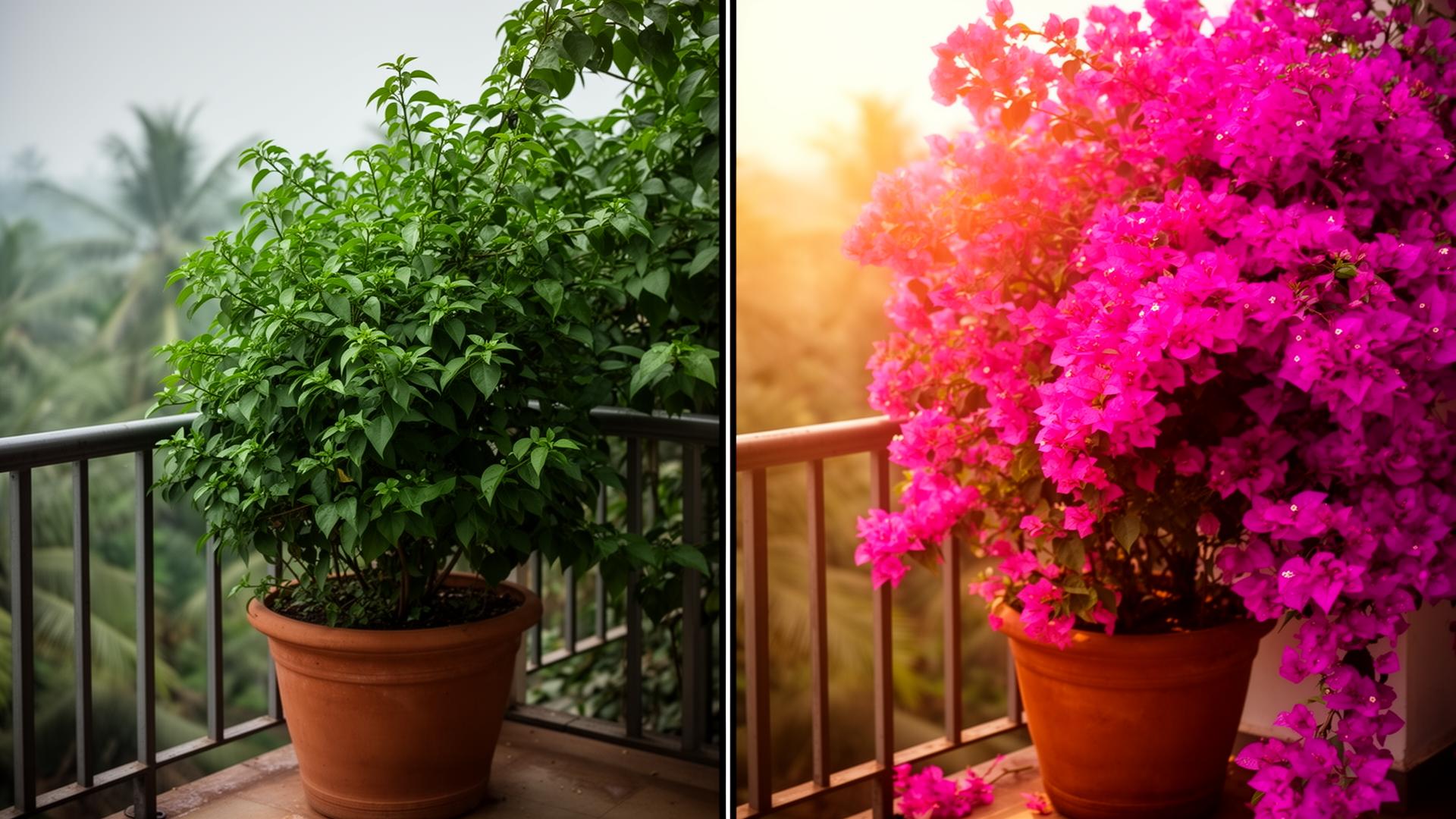
It is not your fault. Every tip you followed made sense. The big pot. The plant food from the shop. The watering schedule from that YouTube video. The problem is that most of that advice was written for a completely different climate, a different plant, a different situation. It was never meant for your balcony in Kerala, during monsoon season, with your bougainvillea sitting in a pot twice its size.
So you kept trying. You spent money on fertilizers that promised flowers and delivered nothing. You asked in Facebook groups and got ten different answers. You watched your neighbors' plants bloom and quietly wondered what you were doing wrong. The answer was never about talent. It was always about having the right information for your specific situation. And that is a very different problem to solve.
The Bloom Breakthrough: One Change at a Time
What if the fix was not adding something, but removing it? The Bloom Breakthrough Guide is built around one core idea: flowering plants do not bloom when they are too comfortable. They bloom when they feel a small, safe pressure to reproduce. That is biology, not magic.
This guide does not give you a list of generic tips. It gives you a system. You start by diagnosing exactly what is blocking your plant — pot size, light, watering, fertilizer, or pruning timing. Then you make one targeted change. That is it.
Imagine stepping onto your balcony and seeing buds where there used to be only leaves. That feeling of quiet confidence is what this guide is really about.
Made for gardeners who are close, but stuck.
Balcony gardeners with leafy, flowerless plants
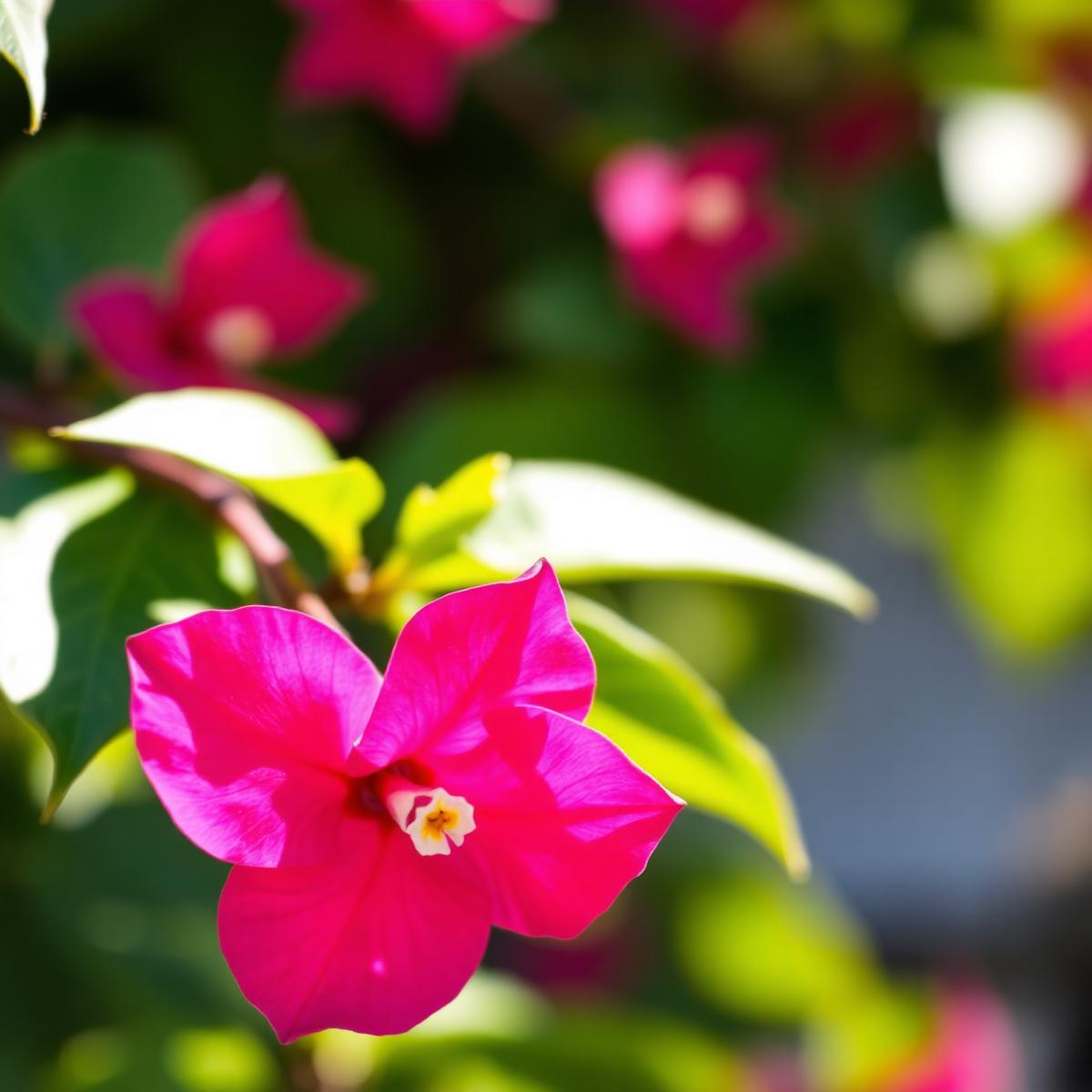
Your roses or bougainvillea look healthy and green but refuse to bloom, and you have no idea what you are doing wrong.
Gardeners who have tried everything
You have bought fertilizers, followed online advice, and tried home remedies. Nothing worked. You need a real diagnosis, not another tip.
Beginners who want a simple, repeatable system
You do not want a chemistry lesson. You want a clear, step-by-step method that works for your plants, your climate, and your schedule.
Your plant is not the problem. Your approach might be.
Stop guessing what's wrong
Most gardeners jump from tip to tip. The guide walks you through a clear diagnostic process — find the real blocker first, then fix it. One change at a time.
Finally understand why leaves win over flowers
A lush, green plant is not a healthy plant — it is a plant stuck in the wrong mode. Learn what specific signals shift it from growing leaves to producing blooms.
A plan built for your climate
Generic advice from Western blogs was never meant for Kerala's monsoon and heat. Every case study is grounded in tropical, warm-climate gardens.
No miracle products needed
The method costs nothing extra. No special fertilizers, no expensive kits. Just a practical, step-by-step approach using what you already have.
Other gardeners had the same problem. Here is what changed.
“I had a bougainvillea full of leaves for two years. Turns out I was giving it too much pot space. One simple change and it started budding within weeks.”
“I thought I just had a black thumb. I didn't. I was overwatering and over-fertilizing at the same time. Once I stopped, my hibiscus came back to life.”
Featured in local gardening communities across Kerala
Why this guide exists — and why it almost didn't.
For a long time, the advice was the same everywhere.
Water more. Fertilize regularly. Give your plant plenty of space to grow. Use a bigger pot. Add this product. Try that one.
And for a long time, none of it worked — not in a real tropical garden, under real monsoon rains, in the kind of heat that makes most Western gardening guides useless. The plants looked fine. Healthy, even. Green leaves everywhere. But no flowers. Season after season.
The frustrating part was not the failure. It was not knowing why. Every tip seemed logical. Every product promised results. It started to feel like some people just had it — a natural gift — and others simply did not.
That belief turned out to be wrong.
The turning point came when the focus shifted away from adding more — more fertilizer, more water, more space — and toward understanding what the plant was actually responding to. That is when everything changed.
It turned out that most flowering plants do not bloom because they are too comfortable. They have no reason to. It is only when the right kind of pressure is applied — the right reduction, the right timing, the right signal — that they shift into bloom mode.
That discovery led to testing across dozens of plants in tropical conditions. Roses. Bougainvillea. Hibiscus. Jasmine. One by one, they started blooming — not because of a miracle product, but because of a clearer understanding of what plants actually respond to.
The Bloom Breakthrough Guide is the result of that process. It is not a list of tips. It is the system that finally made sense of everything — written for gardeners who are tired of guessing and ready to see real results.
A system, not a list of tips.
- Step 1
Diagnose your bloom blockers
Run your plant through a simple diagnostic checklist. No guesswork. You identify the exact reason your plant is stuck — light, water, nutrition, pruning, or pot size.
- Step 2
Remove the comfort
You learn which 'caring' habits are actually telling your plant to skip flowers. Then you make one small, targeted change — nothing drastic, nothing expensive.
- Step 3
Apply the bloom trigger
Once the blocker is gone, you introduce the right signal — a pot adjustment, a watering shift, or a pruning cut at the right time. Your plant gets the message.
- Step 4
Follow the seasonal care guide
Stay on track month by month with a clear, simple routine that keeps your plants blooming — not just once, but season after season.
- Step 5
Watch and adjust
The action plan template helps you track what you changed and what happened next. You stop guessing. You start understanding your plants.
One clear option. No confusion.
The Bloom Breakthrough Guide
- The full ebook — a practical, step-by-step guide to turning leafy plants into reliable bloomers
- The Diagnostic Checklist — find your plant's exact bloom blocker in minutes
- The Action Plan Template — track your changes and know what to do next
- The Seasonal Care Guide — a month-by-month routine to keep blooms coming back
- Works for roses, bougainvillea, hibiscus, jasmine, mandevilla, peace lily, and more
- Built specifically for tropical and warm-climate gardens — not generic Western advice
Less than a cup of coffee. A system you can use for every plant, every season.
Your balcony can tell a different story.
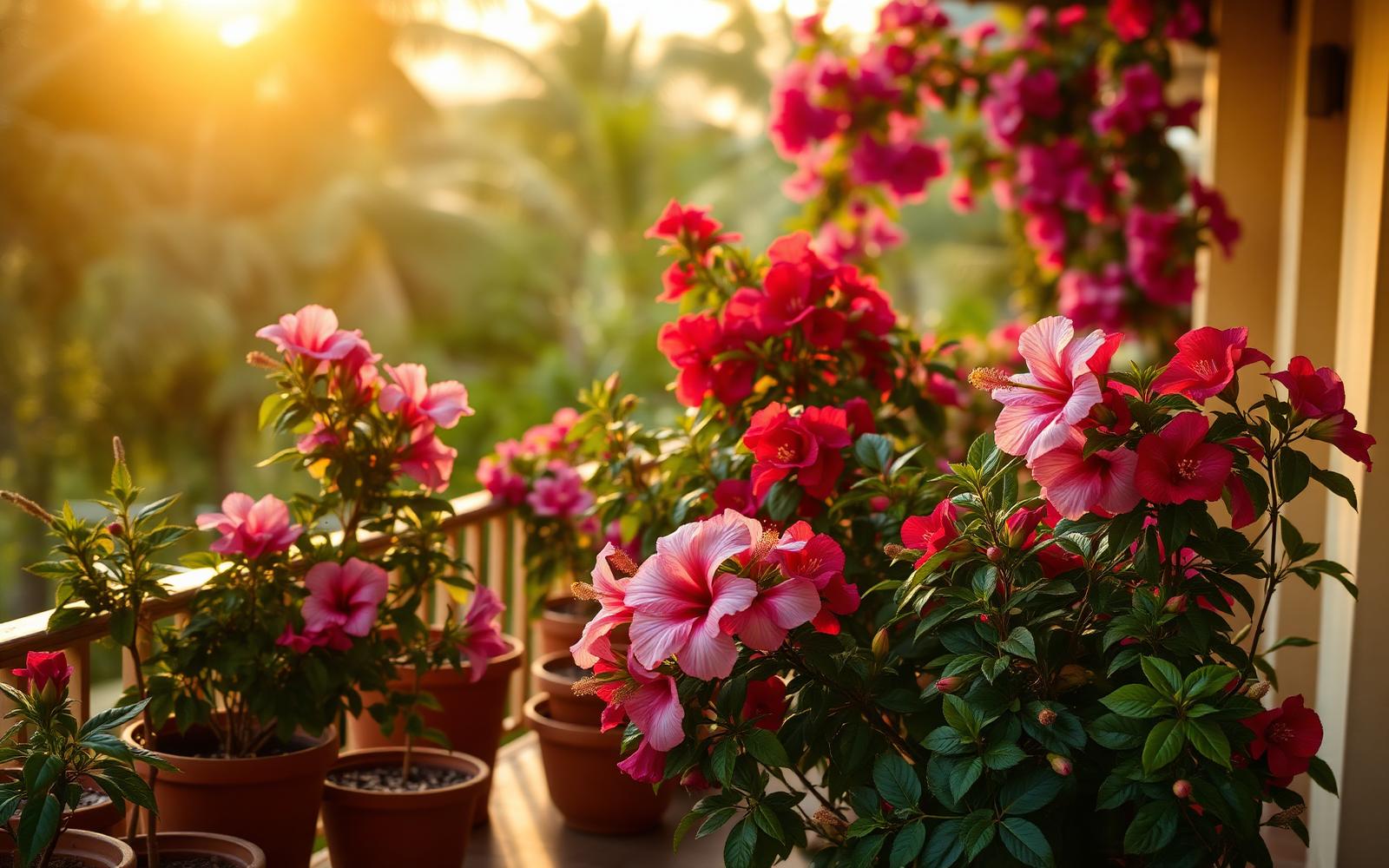
Picture this: you step outside with your morning coffee.
Your bougainvillea is covered in deep pink blooms. Your roses are opening up one by one. Your hibiscus has more buds than you can count.
You did not buy a new miracle product. You did not follow some complicated 20-step routine. You just learned what your plants were actually asking for — and gave them that.
Your neighbors notice. Your family notices. Gardening stops being a source of stress and starts being the quiet, rewarding part of your day you always wanted it to be.
Now think about the other path.
You keep trying tips from the internet. Some from the UK. Some from the US. None designed for your climate, your pots, your plants.
Your bougainvillea keeps pushing out leaves. Another season passes with no blooms. And that quiet voice — the one that says “maybe I'm just not a plant person” — gets a little louder.
That is the real cost of waiting. Not just flowerless plants. But the slow erosion of something you genuinely love.
For $15, you get the full guide plus three tools you can use right away. One small decision. One clear system. A balcony that finally looks the way you always imagined it.
Still on the fence? Let's talk through it.
“I've already tried so many things. Why would this be any different?”
That frustration makes complete sense. Most advice out there treats symptoms, not causes. The Bloom Breakthrough Guide helps you find the one actual blocker that is keeping your plant stuck in leaf mode, then fix it in the right order. One change at a time. No guessing.
“Will this work for my specific plant — bougainvillea, roses, hibiscus?”
Yes. The method is built around how all flowering plants decide to bloom — not just one species. The case studies include bougainvillea, roses, hibiscus, jasmine, mandevilla, and peace lily. If your plant flowers, this guide applies to it.
“Is this just going to tell me to buy more fertilizer?”
Actually, the opposite. One of the biggest insights is that too much nitrogen — the main ingredient in most common fertilizers — is often the hidden reason plants stay leafy. The guide helps you stop over-feeding and create the right balance instead.
“My balcony gets too much rain and too much sun. My conditions are impossible.”
They are not impossible — they are just specific. Thousands of gardeners in Kerala and other tropical regions grow beautiful, blooming gardens on balconies just like yours. The guide was built with warm, humid, high-rainfall climates in mind.
“$15 feels like a risk when I've already wasted money on things that didn't work.”
Fair concern. For $15 you get the full guide, the diagnostic checklist, the action plan template, and the seasonal care guide — four tools, one clear system, built for your exact situation. For most gardeners who try it, the bigger regret is waiting another season before they did.